


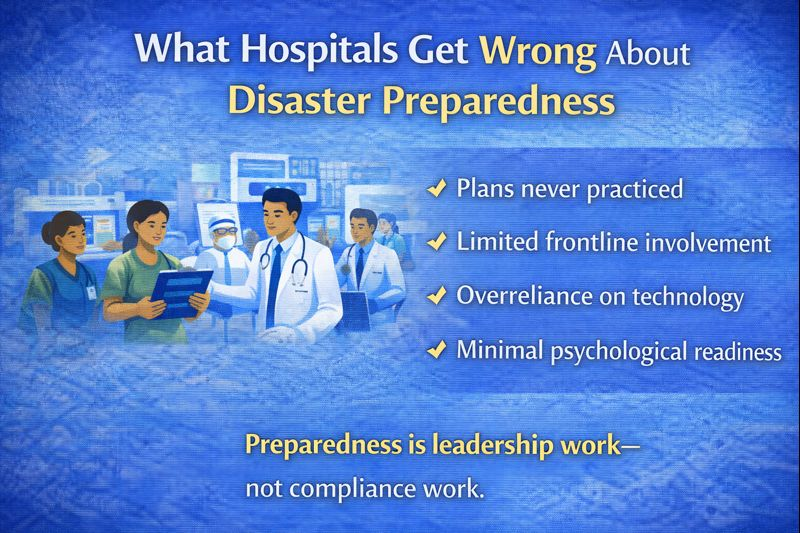
Hospitals invest significant time and resources into preparedness, yet real-world emergencies repeatedly expose the same vulnerabilities. The issue is rarely a lack of planning; it is how preparedness is conceptualized.
Common pitfalls include:
- Plans that are never practiced
- Limited frontline clinician involvement
- Overreliance on technology
- Minimal attention to psychological readiness
Preparedness is not a binder on a shelf. It is a culture built through training, trust, and shared responsibility.
Hospitals that perform well during disasters do not rely on perfect plans. They rely on adaptable people who have practiced together under realistic conditions.
Preparedness is leadership work, not compliance work.
#adventureswithnursejamla