


Healthcare professionals are central to disaster response, yet many are introduced to emergency management concepts only during a crisis. Understanding the emergency management cycle is essential, not just for response, but for effective preparedness and recovery.
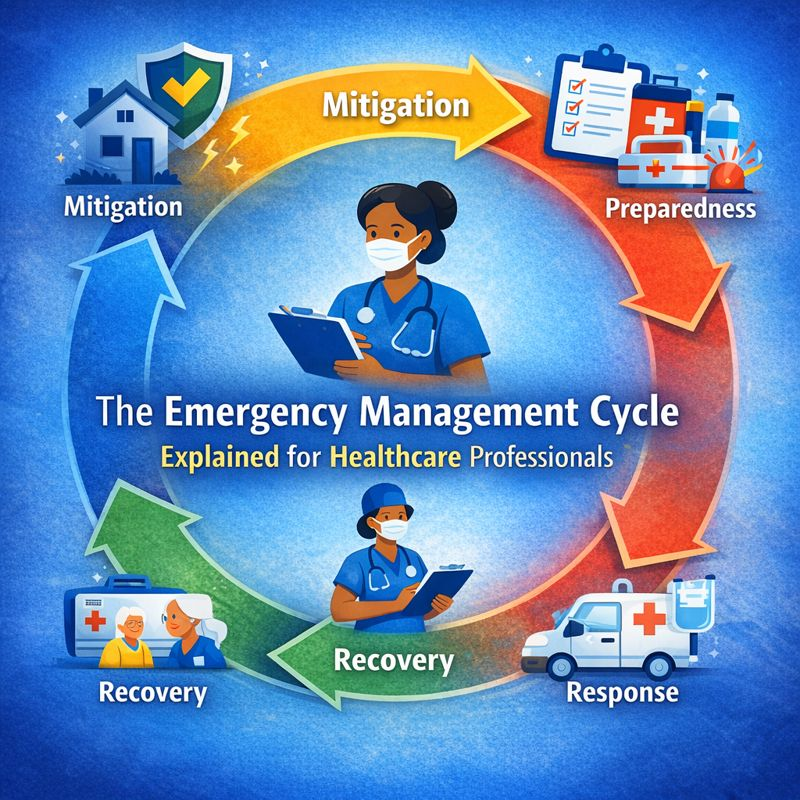
The emergency management cycle provides a framework for understanding how disasters are managed before, during, and after they occur, and where healthcare professionals fit into every phase.
The Four Phases of the Emergency Management Cycle
1. Mitigation
Mitigation focuses on reducing risk before disasters occur.
Healthcare roles in mitigation include:
- Identifying vulnerabilities in patient populations
- Supporting injury and disease prevention programs
- Advocating for safer infrastructure and policies
Mitigation saves lives quietly, long before emergencies unfold.
2. Preparedness
Preparedness ensures systems and individuals are ready to respond.
Healthcare preparedness includes:
- Training and drills
- Protocol development
- Stockpiling and supply management
- Psychological readiness
Preparedness determines how well response plans translate into action.
3. Response
Response begins when an emergency occurs.
Healthcare professionals are heavily involved in:
- Triage and clinical care
- Infection prevention
- Crisis communication
- Resource allocation
Effective response relies on the strength of preparedness.
4. Recovery
Recovery is often overlooked, but it is critical.
Healthcare recovery involves:
- Restoring services
- Supporting workforce mental health
- Evaluating lessons learned
- Rebuilding trust with communities
Recovery prepares systems for the next emergency.
Why This Cycle Matters for Nurses and Public Health Professionals
Understanding the emergency management cycle empowers healthcare professionals to:
- Recognize their role beyond response
- Advocate for preparedness resources
- Improve patient outcomes
- Reduce burnout during crises
Prepared clinicians are safer, more effective, and more resilient.
Disasters do not begin with response, and they do not end when the headlines fade. The emergency management cycle reminds us that preparedness is continuous, dynamic, and shared.
Healthcare professionals are not just responders, we are planners, educators, advocates, and leaders.
Call to Action
Ask yourself:
- Where do I fit in each phase?
- How can I strengthen preparedness in my role?
Preparedness is professional responsibility, and a public trust.
#adventureswithnursejamla