


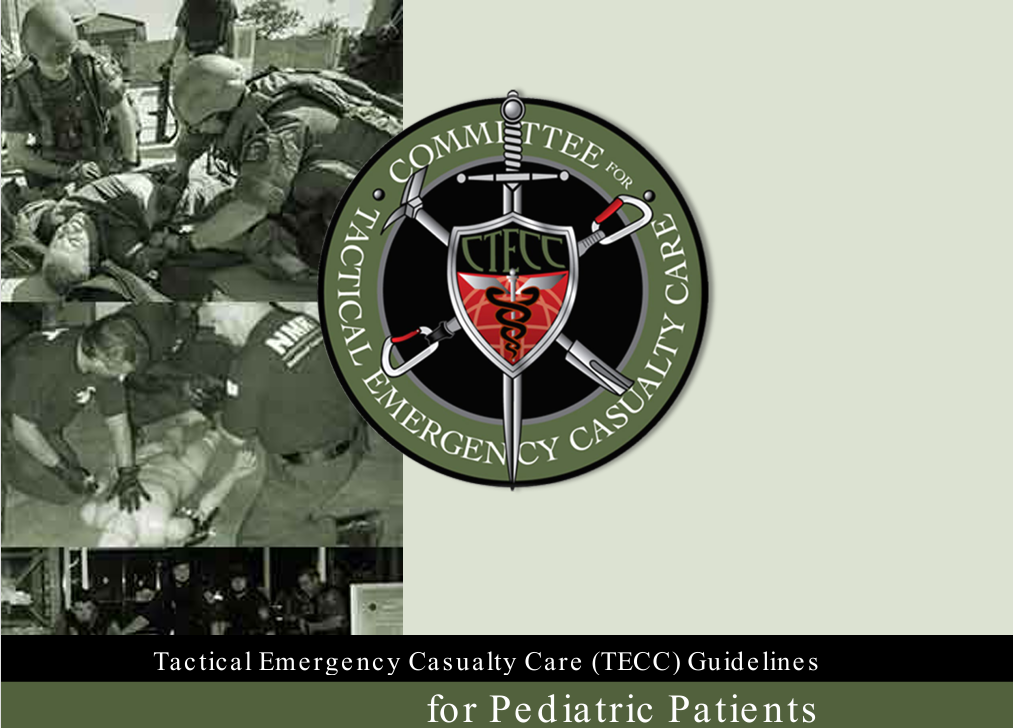
In environments with real or perceived threat(s), traditional response paradigms prioritizing scene safety before patient care may result in treatment delays that negatively affect patient and rescuer outcomes. To address this gap, the Tactical Emergency Casualty Care (TECC) guidelines describe patient care standards for persons of all age groups in an all-hazards, high-threat environment.
The TECC construct consists of three dynamic phases of care: 1. Direct Threat 2. Indirect Threat 3. Evacuation These phases are intended to correlate directly with the contemporaneous threat level and are not solely geographic.
The Tactical Emergency Casualty Care (TECC) guidelines are a set of best practice recommendations for casualty management during civilian tactical and rescue operations. Based upon the principles of Tactical Combat Casualty Care (TCCC), TECC accounts for the differences in the civilian environment, resources, patient population, and scope of practice from the military combat environment of TCCC.
Download the guidelines here: https://www.c-tecc.org/images/F_TECC_Peds_Guidelines_2025_FINAL.pdf
Call to Action:
- This resource is designed to be used by those in conflict and high-threat disaster and emergency zones
- Share with your Prehospital tactical medical, DMAT, Emergency Humanitarian, and Military Medical teams
For more pediatric content, please follow:
www.npdcoalition.org
nationalpedicoalition@gmail.com
X (Formerly Twitter) @npdcoalition
#adventureswithnursejamla