


A million-square-foot medical supply warehouse in California has been burning for days, sending smoke into surrounding communities and disrupting a major healthcare distribution hub. Thankfully, no injuries have been reported, but the ripple effects extend far beyond one building.
For those of us who work in disaster preparedness, this is a reminder that resilience isn’t just about having supplies. It’s about redundancy, contingency planning, infrastructure, and asking difficult questions before an emergency occurs.
What happens when a key distribution center is suddenly lost?
How quickly can healthcare systems adapt?
Do we know where our alternate suppliers are? Have we tested those plans?
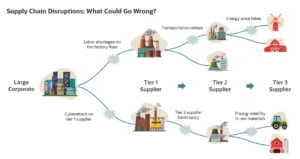
The healthcare supply chain has become increasingly complex and interconnected. A fire in one warehouse can affect hospitals, emergency departments, clinics, and patients hundreds or even thousands of miles away.
Preparedness is often invisible when it works well. It looks like backup plans, diversified supply chains, strong partnerships, and teams that have practiced what they hope they’ll never need to do.
Events like this remind us that disasters don’t always arrive as hurricanes, pandemics, or mass casualty incidents. Sometimes they begin with a single facility, a failed system, and a disruption that exposes vulnerabilities we didn’t realize existed.
The question isn’t whether disruptions will occur. It’s whether we’ve built systems resilient enough to withstand them.
Thinking of the firefighters, employees, and communities affected by this ongoing incident.
Fire destroys 1 million-square-foot facility in California
A Guide to Supply Chain Disruption | SafetyCulture