

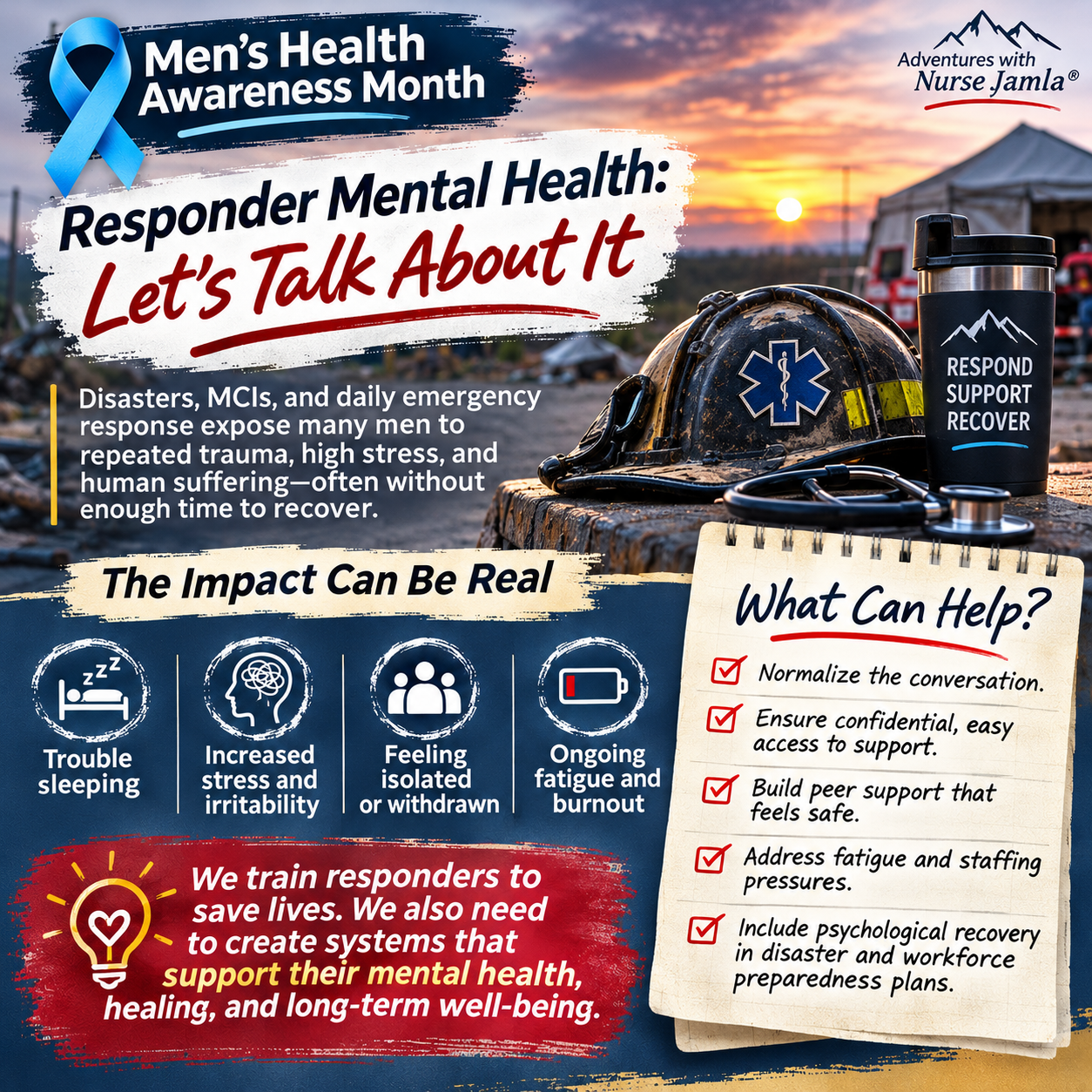

We spend a lot of time training firefighters, paramedics, law enforcement officers, and disaster responders to manage emergencies. We teach them how to assess patients, make decisions under pressure, and function in chaotic environments.
But how much time do we spend preparing them for what happens after the emergency is over?
Many of the men working in these professions are exposed to death, serious injuries, violence, and human suffering throughout their careers. Some experience these events repeatedly, sometimes within the same shift.
And then they’re expected to return to work and do it all over again.
I’ve worked alongside responders who could manage the most difficult scenes imaginable but struggled to talk about how those experiences affected them.
We need to stop confusing silence with resilience.
Not everyone who experiences a traumatic event will develop PTSD, but repeated exposure to trauma can affect sleep, relationships, emotional well-being, and overall health.
And we cannot keep telling people to be resilient without creating workplaces where they can actually ask for help.
There are things we should be doing differently:
- Train supervisors to recognize changes in behavior, sleep, and performance that may indicate someone is struggling.
- Make confidential mental health resources accessible without unnecessary barriers.
- Encourage peer support without forcing responders to discuss traumatic experiences before they’re ready.
- Address fatigue, staffing, and repeated exposure to traumatic incidents as occupational health concerns.
- Include psychological recovery in disaster response and workforce preparedness plans.
Mental health support should not begin when someone reaches a breaking point.
As we recognize Men’s Health Awareness Month, I want us to remember the men who spend their careers caring for others, often while neglecting their own needs.
We prepare responders to save lives. We have a responsibility to prepare our systems to support theirs, too.
#MensHealthAwarenessMonth #ResponderMentalHealth #DisasterPreparedness #EmergencyNursing #PublicHealthPreparedness #FirstResponderWellness #AdventuresWithNurseJamla