


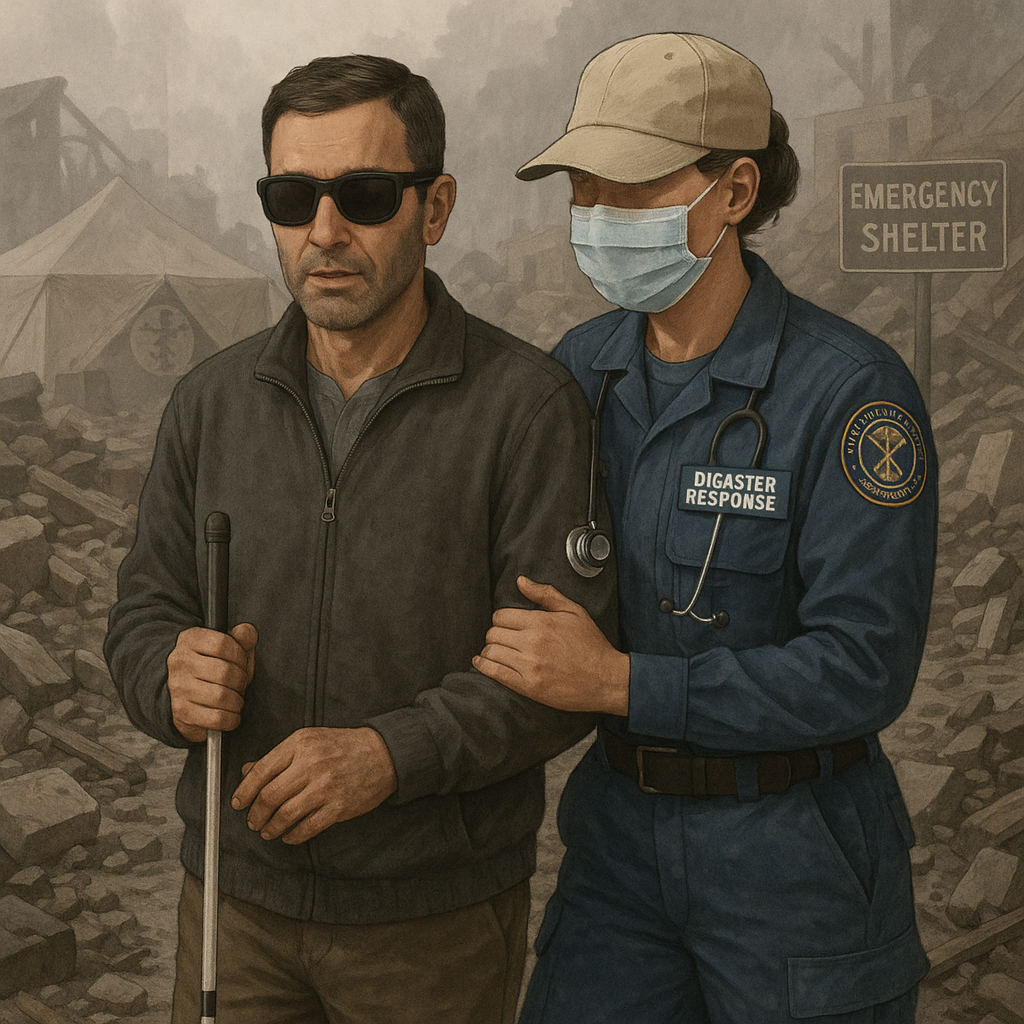
When disasters strike-whether floods, earthquakes, fires, or armed conflict-people often scramble for survival. But for those who are blind or visually impaired, navigating a disaster can become a matter of life or death in ways the sighted world rarely considers.
The world goes dim for everyone in a crisis, but for blind individuals, it disappears entirely without preparation, support, or inclusion.
Disasters are NOT “Equal Opportunity”
Inaccessible warning systems, chaotic evacuations, and visual cues dominate most disaster protocols. Sirens blare, visual alerts flash, signage changes, and evacuation maps are posted, but what happens if you can’t see the map? Or you rely on memory to navigate a building that’s now partially collapsed?
For blind individuals:
- Emergency shelters may lack tactile signage or orientation support.
- Disruption of familiar routes becomes disorienting, even dangerous.
- Guide dogs may be traumatized or denied shelter access.
- Assistance devices may be lost, broken, or not prioritized in rescue.
The Impact of Exclusion
Too often, blind individuals are treated as afterthoughts in disaster planning. Their needs are lumped into “special populations” or ignored altogether. This oversight leads to:
- Delayed evacuations
- Higher injury rates
- Greater psychological trauma
- Difficulty accessing post-disaster aid or mental health services
Blind people may also be hesitant to ask for help during chaos, fearing stigma or being left behind.
A Path Forward
- Inclusive Planning: Emergency management must involve people with visual impairments at every stage-design, drills, and response.
- Accessible Alerts: Use audio-based warnings alongside visual cues, ensuring screen readers and radios convey critical info.
- Training Responders: Teach disaster responders how to guide and communicate with blind survivors effectively and respectfully.
- Design for All: Create evacuation routes, signage, and apps that are usable by everyone, including tactile and auditory elements.
- Community Networks: Encourage buddy systems and local support chains to assist visually impaired individuals before, during, and after emergencies.
Resilience Is a Human Right
Being blind doesn’t mean being helpless. But it does mean needing equity-not charity-in disaster response. Blind individuals are capable, resourceful, and resilient. What they need is a system that doesn’t leave them behind.
Let’s not wait until the next earthquake or hurricane to think inclusively. The time to design for everyone is now-before the sirens, before the smoke, before the lights go out.
Because no one should be left in the dark.
#adventureswithnursejamla