

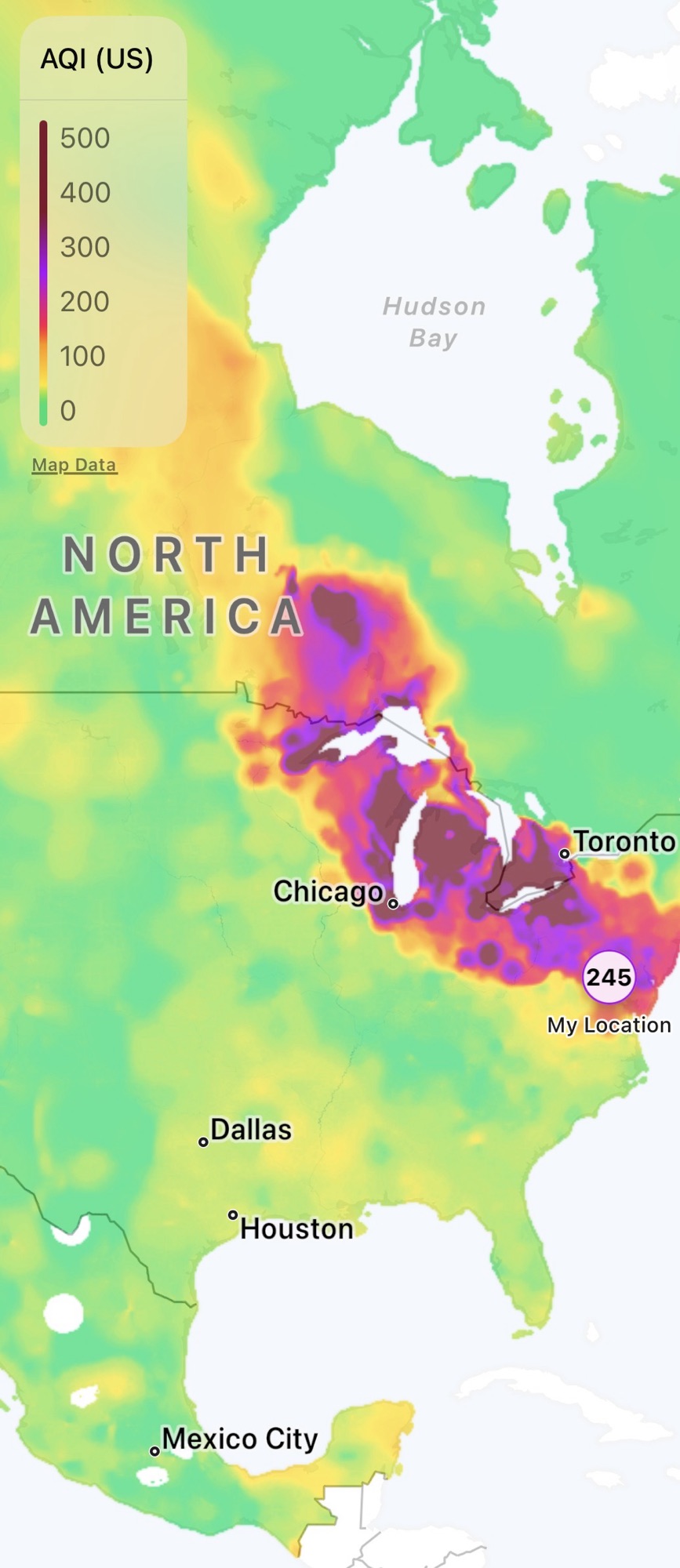


The map above tells a powerful story.
Large portions of the northeastern United States and parts of Canada are experiencing Very Unhealthy to Hazardous air quality, with some areas reaching Air Quality Index (AQI) values well above 200. In my area, the AQI is 245, a level where everyone, not just vulnerable populations, can experience adverse health effects.
While many people associate disasters with hurricanes, floods, earthquakes, or wildfires, poor air quality is also a disaster risk. Whether caused by wildfire smoke, industrial pollution, or other environmental events, unhealthy air can overwhelm healthcare systems, worsen chronic illnesses, and impact communities hundreds or even thousands of miles away from the source.
What Does an AQI of 245 Mean?
The Air Quality Index (AQI) measures how polluted the air is and the associated health risks.
- 0–50: Good
- 51–100: Moderate
- 101–150: Unhealthy for Sensitive Groups
- 151–200: Unhealthy
- 201–300: Very Unhealthy
- 301+: Hazardous
At 245, the recommendation is clear:
Everyone should limit outdoor exposure.
Who is Most at Risk?
Although anyone can be affected, certain groups face much higher risks:
- Children
- Older adults
- Pregnant individuals
- People with asthma or COPD
- Individuals with heart disease
- Outdoor workers
- First responders
- People experiencing homelessness
Even healthy adults may notice:
- Burning eyes
- Sore throat
- Persistent cough
- Chest tightness
- Headaches
- Fatigue
- Shortness of breath
How to Protect Yourself
Stay indoors when possible.
Keep windows and doors closed.
Use air conditioning if available.
Set it to recirculate indoor air rather than pulling air from outside.
Improve indoor air quality.
Use a HEPA air purifier if you have one.
Wear the right mask outdoors.
If you must be outside for prolonged periods, a well-fitted N95 or KN95 respirator offers meaningful protection against fine particulate matter (PM2.5). Cloth masks and surgical masks provide much less protection from smoke particles.
Reduce strenuous outdoor activity.
Running, exercising, mowing the lawn, or other vigorous activities increase the amount of polluted air you inhale.
Monitor symptoms.
Seek medical attention if you develop:
- Difficulty breathing
- Chest pain
- Severe wheezing
- Persistent dizziness
- Confusion
- Symptoms that rapidly worsen
Don’t Forget Your Pets
Smoke affects animals, too.
Keep pets indoors as much as possible, provide plenty of fresh water, and avoid long walks or vigorous play until air quality improves.
Disaster Preparedness Includes Air Quality
As disaster professionals, we often focus on dramatic events with immediate impacts. But air quality emergencies remind us that some disasters unfold quietly.
Poor air quality can:
- Increase emergency department visits
- Exacerbate chronic respiratory and cardiovascular disease
- Disrupt outdoor work and recreation
- Affect schools and community events
- Place additional strain on healthcare resources
Preparedness isn’t only about responding after a disaster, it means recognizing emerging threats and taking simple actions before they become health emergencies.
Today, checking the AQI should become as routine as checking the weather forecast.
Because sometimes, the most dangerous thing outside isn’t what you can see, it’s what you’re breathing.
What is the AQI where you live today? Have you changed your plans because of the air quality?
#adventureswithnursejamla