

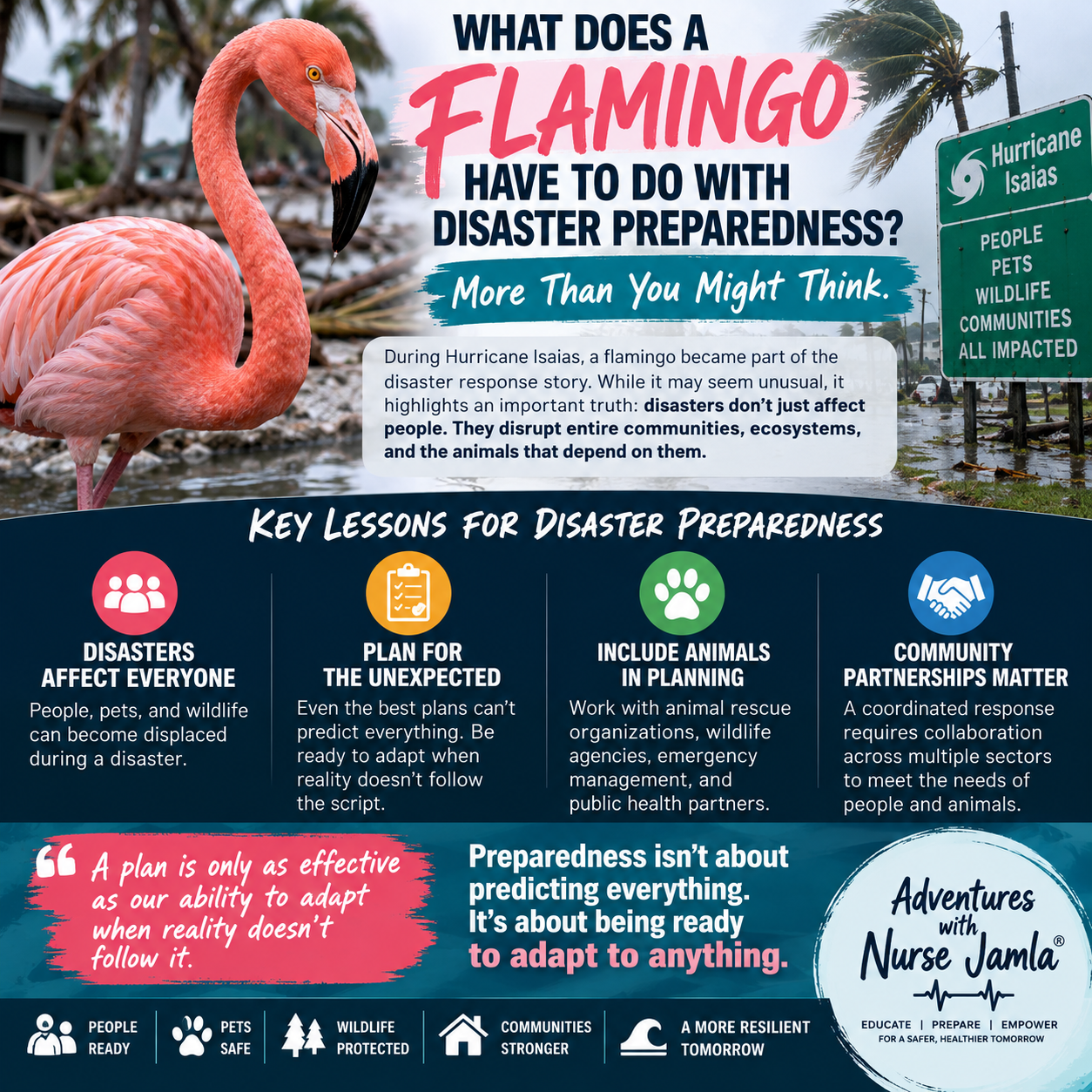

During Hurricane Isaias, a flamingo became part of the disaster response story. While it may seem unusual, it highlights something we often overlook when discussing disaster preparedness: disasters don’t just affect people. They disrupt entire communities, ecosystems, and the animals that depend on them.
When we talk about disaster response, our attention often focuses on evacuations, emergency shelters, healthcare systems, and restoring essential services. These are all critical, but preparedness also means anticipating the unexpected.
Wildlife can become displaced, domestic animals can be separated from their owners, and responders may encounter situations that were never part of their original operational plans, and that is where preparedness becomes more than simply having a written plan.
A plan is only as effective as our ability to adapt when reality doesn’t follow it.
As a disaster nurse, one of the lessons I continue to emphasize is that we cannot prepare for every possible scenario, but we can develop the knowledge, partnerships, resources, and decision-making skills necessary to respond when something unexpected happens.
This includes understanding the roles of animal rescue organizations, wildlife agencies, emergency management, public health, and community partners.
Disaster preparedness isn’t just about responding to what we expect. It’s about building the capacity to manage what we don’t.
So the next time someone asks what a flamingo has to do with hurricane response, remember that disasters rarely follow the script we write for them.
https://www.facebook.com/share/r/1ErNzHiQeT/
🦩 Preparedness isn’t about predicting everything. It’s about being ready to adapt to anything.
#DisasterPreparedness #HurricaneIsaias #DisasterResponse #EmergencyManagement #DisasterNursing #OneHealth #AdventuresWithNurseJamla