

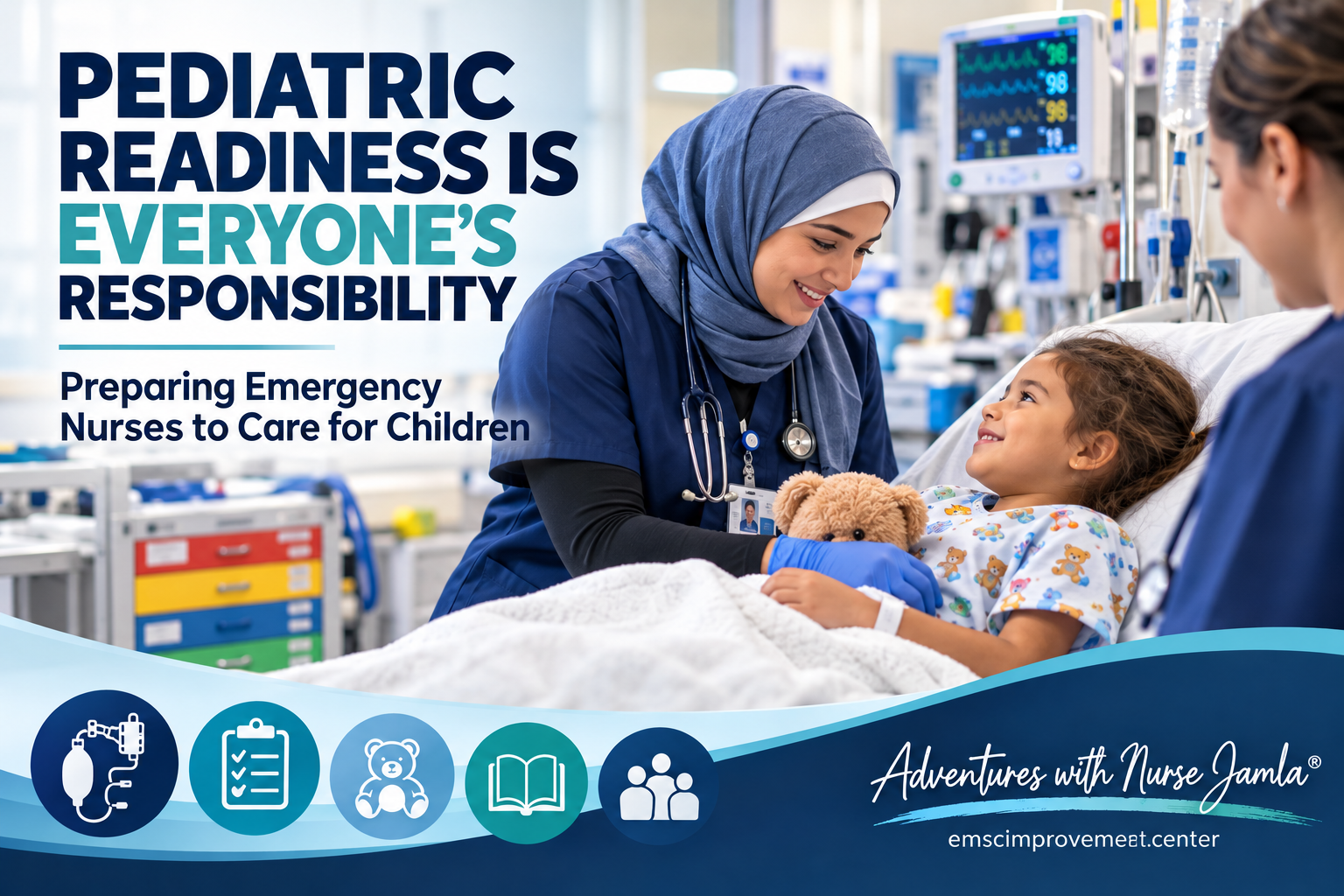

When a critically ill or injured child arrives at an emergency department, there is no time to begin figuring out whether the appropriate equipment is available, whether staff are comfortable with pediatric medication dosing, or whether the department has established protocols for pediatric emergencies.
The expectation is that we are ready.
But are we?
Throughout my career in emergency nursing, pediatric emergency care, and disaster response, I have seen firsthand how preparation, training, and access to resources influence patient outcomes. I have also seen how easily pediatric readiness can become an afterthought, particularly in emergency departments where children represent a relatively small percentage of the patient population.
The reality is that children do not always arrive at pediatric specialty hospitals. They arrive at community hospitals, rural emergency departments, critical access hospitals, and facilities where pediatric emergencies may be infrequent.
Every emergency department that receives children must be prepared to care for them.
That is why I want to highlight an important resource for emergency nurses: the Emergency Medical Services for Children (EMSC) Program and its efforts to improve pediatric readiness nationwide.
Pediatric Readiness Is More Than Having Smaller Equipment
When we discuss pediatric readiness, conversations frequently focus on equipment. Do we have pediatric blood pressure cuffs? Appropriately sized airway equipment? Weight-based medication dosing tools?
These are important questions, but pediatric readiness extends well beyond supplies.
It includes the knowledge, skills, policies, processes, and organizational commitment necessary to provide safe, effective, and developmentally appropriate emergency care to children.
Children are not simply smaller adults.
Their anatomy, physiology, developmental needs, communication abilities, and responses to illness and injury differ significantly from those of adults. A child experiencing respiratory distress may deteriorate rapidly. A medication error involving weight-based dosing can have serious consequences. An infant, toddler, or adolescent may present with different symptoms despite experiencing the same underlying emergency.
And beyond the clinical considerations, we must recognize the emotional and psychological needs of children and their families.
A frightened child does not necessarily understand what is happening, why procedures are necessary, or why they have been separated from a caregiver.
Being pediatric ready means preparing for all these challenges, not simply having the right equipment in a cabinet.
The EMSC Program: Resources Emergency Nurses Should Know About
The Emergency Medical Services for Children Program works to improve emergency care for children across the healthcare system.
Through the EMSC Innovation and Improvement Center, emergency nurses can access resources designed to strengthen pediatric emergency care and support departments working toward improved readiness.
One of the most valuable aspects of these resources is that they are free and openly accessible.
The materials have been developed with pediatric emergency care experts and in partnership with organizations including the Emergency Nurses Association, American Academy of Pediatrics, and American College of Emergency Physicians.
This article is an independent educational commentary. References to the EMSC Program and its resources do not imply endorsement of Adventures with Nurse Jamla® by EMSC, HRSA, or its partner organizations.