

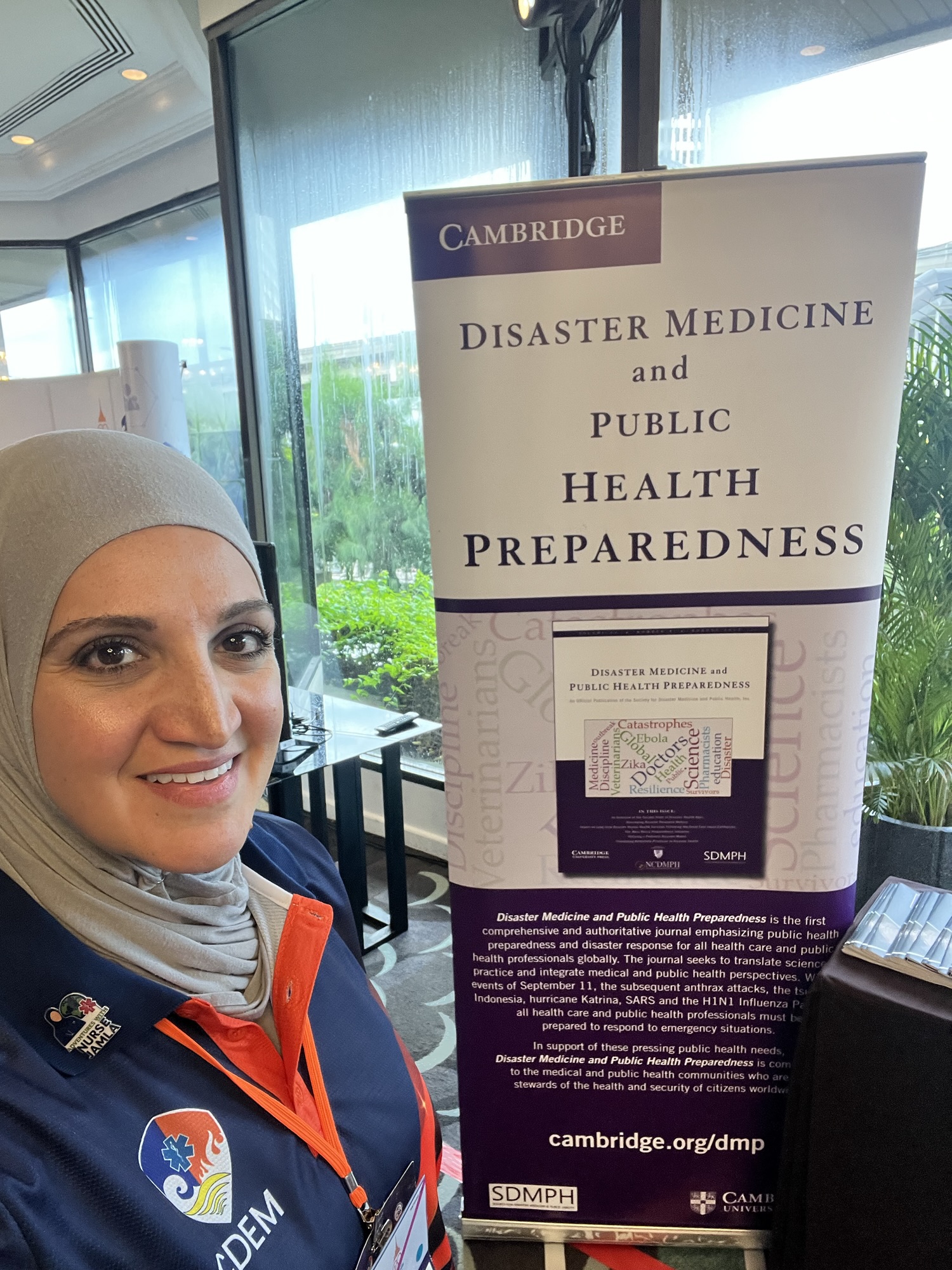

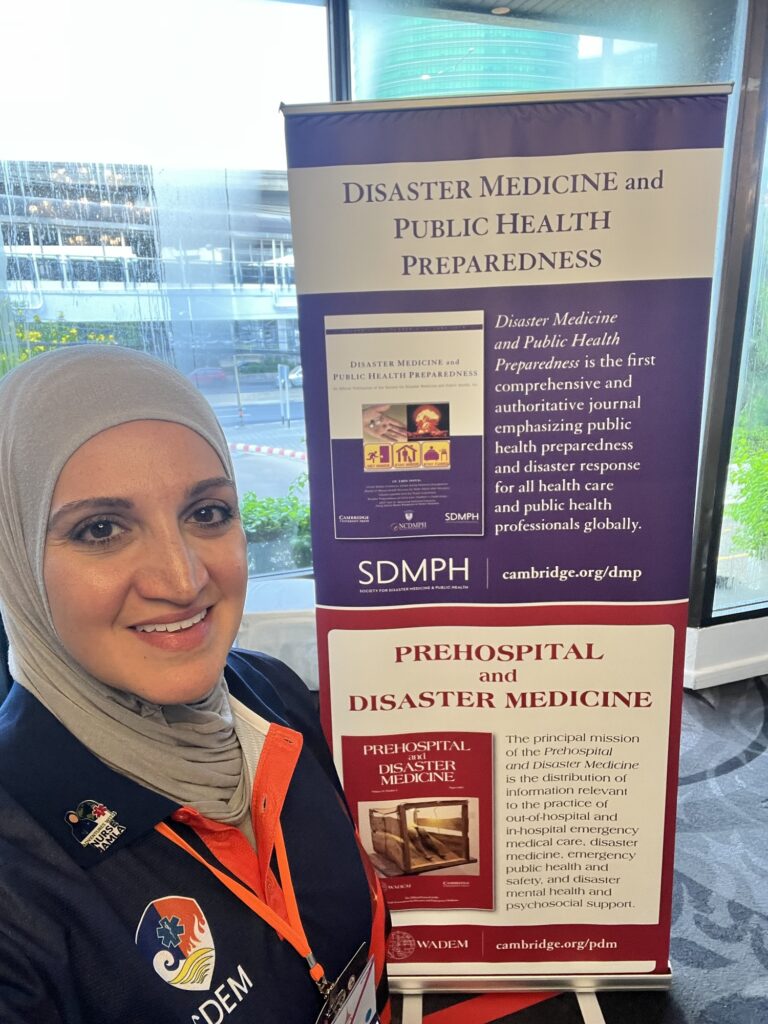
Seeing Disaster Medicine and Public Health Preparedness represented here hits a little differently for me now.
I have spent much of my career responding to disasters, caring for patients in emergency settings, teaching disaster preparedness, and trying to make sure nurses have a seat at tables where decisions about preparedness and response are being made. Today, I also have the privilege of serving as a Deputy Editor for Disaster Medicine and Public Health Preparedness.
And that role has reinforced something I believe very strongly: we need more nurses publishing.
Nurses are at the bedside when plans meet reality. We are in emergency departments when systems become overwhelmed. We deploy into communities after disasters. We care for children, older adults, displaced populations, and people whose needs do not always fit neatly into an emergency operations plan. We see where communication breaks down, where resources become inaccessible, and where policies written on paper do not work the way someone expected them to in practice.
But experiencing those things is not enough.
If we identify a problem, develop a better way to do something, evaluate an intervention, learn something during a response, or recognize a gap that keeps occurring, we need to write about it.
Publishing is not just about adding another line to a CV.
It is how experience becomes evidence.
It is how lessons from one response reach the next response.
It is how practice influences policy.
It is how we challenge assumptions and improve preparedness.
And it is how nursing knowledge becomes part of the permanent disaster literature rather than remaining a conversation between colleagues after the mission is over.
Disaster medicine and public health preparedness are inherently multidisciplinary. Physicians, paramedics, public health professionals, emergency managers, researchers, humanitarian professionals, and many others belong in this work.
So do nurses.
We should be conducting the research. We should be writing the case reports and commentaries. We should be evaluating our programs. We should be reviewing manuscripts. We should be serving on editorial boards, and we should be helping determine what questions the disaster community asks next.
I am proud to serve as a Deputy Editor for Disaster Medicine and Public Health Preparedness, but I am even more excited about what it means to help other professionals, especially nurses, move their knowledge from the bedside, the classroom, the field, and the disaster response into the published literature.
Nurses have something to say. We need to make sure it is documented, studied, published, and heard.