


A field trip should end with children going home to their families.
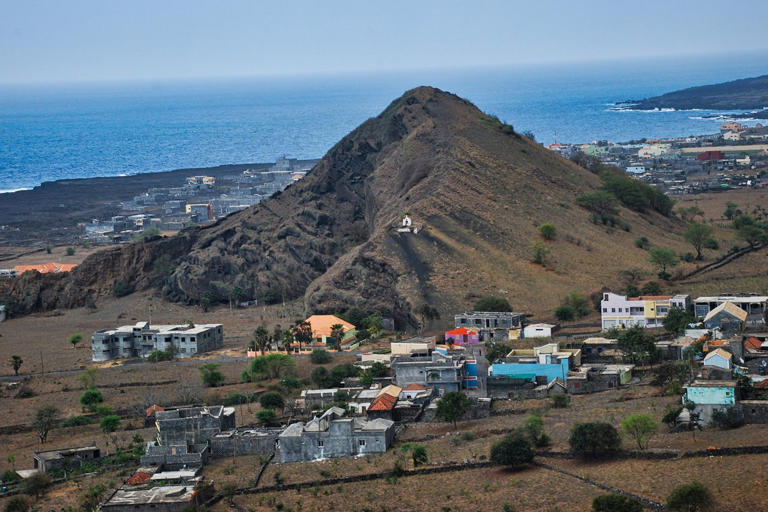
Instead, a community in Cape Verde is grieving after a bus carrying mostly children and teenagers plunged approximately 100 feet into a ravine on Fogo Island. At least 25 people were killed, including the driver, and others were injured. The crash occurred on September 5 as the group was returning from an excursion to Chã das Caldeiras. The cause remains under investigation.
It is difficult to read a story like this and not immediately think about the families. Parents sent their children on what should have been an ordinary outing. Within hours, some were waiting for news at a hospital while others were learning that their child would never come home.
But as a disaster nurse, I also read this story differently.
I think about the responders arriving at the bottom of a rocky ravine. I think about access to the patients, extrication, triage, hemorrhage control, spinal injuries, traumatic brain injuries, pain management, pediatric equipment, transportation, and the decisions that have to be made when there are many critically injured patients at once.
Reports describe terrain that complicated rescue and recovery efforts. Several injured patients were transported to São Francisco de Assis Regional Hospital, including patients reported to be in serious condition.
This is what we mean when we talk about a mass casualty incident. It is not defined simply by a certain number of patients. What matters is the relationship between what the incident demands and what the responding system can provide.
Twenty injured patients may be manageable for a major trauma center with extensive resources. The same number can overwhelm a smaller hospital, an island health system, or a community with limited EMS, rescue, blood products, specialty care, transportation, or personnel.
And when many of the patients are children, the response becomes even more complicated.
Pediatric disaster preparedness cannot begin when the children arrive at the hospital.
Do we have appropriately sized airway equipment? Do we have pediatric medication dosing readily available? Can our teams rapidly recognize compensated shock in a child? Do we have enough pediatric cervical collars, blood pressure cuffs, IV and IO supplies, and other equipment? Where will critically injured children go if they require a higher level of care? How will we identify them and reunify them with their families? Who is communicating with frightened parents while clinicians are simultaneously trying to care for multiple critically injured children?
These are not theoretical questions.
They are questions that need answers before the disaster happens.
There is another part of incidents like this that receives far less attention: the people providing the care.
Imagine being one of the first responders climbing into that ravine. Imagine triaging multiple children and teenagers, knowing that you cannot save everyone. Imagine being a nurse receiving patient after patient while simultaneously hearing families outside asking whether their child is alive.
Then imagine finishing your shift and being expected to simply go home.
We spend considerable time teaching clinicians how to respond to disasters. We need to spend just as much time preparing organizations to care for the people who respond to them. Psychological first aid, peer support, leadership presence, appropriate staffing and relief, opportunities for decompression, and access to mental health resources cannot be afterthoughts.
The effects also extend far beyond the hospital. When so many young people are killed in a single incident, an entire community experiences the disaster. Classmates lose friends. Teachers lose students. Families lose children. Responders carry images they may never forget. Healthcare workers care not only for physical injuries but for grief, fear, uncertainty, and trauma that can continue long after the ambulances stop arriving.
That is why disaster preparedness cannot simply be a plan sitting on a shelf.
We have to exercise these scenarios. We have to practice pediatric mass casualty triage. We have to test communication and family reunification plans. We have to know where our supplies are and whether we actually have enough of them. We have to understand our transportation and referral capabilities. We have to identify what happens when the closest hospital reaches capacity. And we have to prepare healthcare workers for the ethical and psychological realities of caring for patients when needs exceed available resources.
Disasters expose the difference between having a plan and having a capability.
My thoughts are with the families who lost their children and loved ones, those who were injured, the students and communities affected, and the responders and healthcare professionals caring for them.
But our responsibility cannot end with expressing sympathy.
Every tragedy is also a reminder to look at our own systems and ask a difficult question:
If this happened in YOUR community tomorrow, would we actually be ready?